VOUX MAG

CELEBRITIES NEWS

Hot

Monday, February 9, 2026

What to know about Takaichi's conservative policies after big election win

February 09, 2026
What to know about Takaichi's conservative policies after big election win

TOKYO (AP) — Japanese Prime Minister Sanae Takaichi'sbig election winpaves the way for her ruling party to dominate the crucial lower house of parliament. It also gives her the political power to make a strong rightward shift in Japan's security, immigration and social policies.

Here's what to know about that divisive conservative agenda, which she calls necessary to make Japan "strong and prosperous."

Larger military capability, spending and arms sales

Takaichi has pledged to revisesecurity and defense policiesby December to bolster Japan's military capabilities, lifting a ban on weapons exports and moving further away from postwar pacifist principles.

Takaichi wants to build up intelligence-gathering to work more closely with ally Washington and defense partners such as Australia and Britain. She plans to establish a national intelligence agency to meet those goals. She is also pushing to enact a highly controversial anti-espionage law that experts say could undermine civil rights.

Takaichihas followed through on a pledge to U.S. President Donald Trump to push Japan's annual defense budget to double 2022 levels to 2% of its gross domestic product by March.

Trump, China and WWII history

Takaichi is set to visit Washington to meet with Trump at the White House on March 19. The U.S. president announced on social media the trip as he endorsed the prime minister ahead of Sunday's election.

The talks are expected to focus on defense spending, investment commitments under a $550 billion package for Washington that Japan pledged in October, as well as China. Trump will make a trip in April to Beijing to meet with Chinese leader Xi Jinping.

Takaichi's remarks in Novembersuggesting possible Japanese involvement if China takes military action against Taiwan, a self-governing island that Beijing claims as its own, led to diplomatic and economic reprisals from China.

Takaichi, who has gained firmer political clout after the election, could pursue a more hawkish stance with China. This was hinted at when she mentioned her wish to visit Tokyo's Yasukuni Shrine, where the remains of war criminals are kept.

Takaichi, who used to be a regular visitor to Yasukuni, has stayed away from praying at the shrine since taking office. But on Sunday, during an interview with Fuji Television, Takaichi said she wants to create an environment to allow a Yasukuni visit that can be understood by neighboring countries, which regularly protest when it occurs.

Tougher measures on immigration, foreign labor

She has also been pushing for tougher policies on immigration and foreigners.

This resonates with a growing far-right population that has supported the rise of anti-globalist party Sanseito, which says the LDP's promotion of foreign labor as a solution for Japan's declining population is making Japanese communities unsafe and causing cultural clashes.

Her government in January approved tougher rules on permanent residency and naturalization, as well as measures to prevent unpaid tax and social insurance.

Preserving traditional family values

Takaichi supports the imperial family'smale-only successionand opposes same-sex marriage.

She is also against a revision to the 19th-century civil law that would allow separate surnames for married couples so that women don't get pressured into abandoning theirs.

In a step that rights activists call an attempt to block adual surname system, Takaichi is calling for a law to allow the greater use of maiden names as aliases instead.

Big government spending, consumption tax cut

Her top economic priority is to address rising prices and sluggish wages. And she needs to pass a budget bill for fiscal 2026 to fund those measures.

Takaichi advocates boosting government spending despite concerns that such moves will delay progress on trimming Japan's national debt, which is about triple the size of its economy.

Takaichi last year introduced a "crisis-management investment" plan in 17 strategic areas such as food, energy, defense and supply chains.

She also proposed a temporary sales tax cut.

She said in her campaign pledge the government will speed up consideration of suspending an 8% food consumption tax for two years to ease the burden of household living costs.

But her ambiguity over the plan, including how to fund the tax cut, caused unease in financial markets. Japan has the highest national debt among advanced economies.

Read More

On This Date: The Nation's First Weather Service Was Created

February 09, 2026
On This Date: The Nation's First Weather Service Was Created

In December 1869, the improbably named Dr. Increase Lapham read a stunning report in his local newspaper.

The Weather Channel

On the8th of that month, "The Milwaukee Sentinel published a list of 1,914 vessels, valued at $4,100,000, that had been lost on the Great Lakes in the year 1869, with loss of 209 lives of sailors and passengers."

Lapham had long known that weather on the Great Lakes was dangerous and posed a major threat to the ships and passengers that traveled on them. Yet, before that report, he hadn't seen the statistics summarized so strikingly. He knew something had to be done.

So, he wrote to Congress. It was far from the first time that Lapham had raised his concerns about studying the weather. In the long letter he composed, though, he suggested the use of a technology that had only recently come into common use: the telegraph.

Lapham's proposal was notably ambitious and elaborate in scale, at least in comparison to any weather observation systems that had come before.

Advertisement

Library of Congress

He wrote, "Now, it is quite clear that if we could have the services of a competent meteorologist at some suitable place on the Lakes with the aid of a sufficient corps of observers with compared instruments at stations located every 200 or 300 miles toward the west, and the cooperation of the telegraph companies, the origin and progress of these great storms could be fully traced, their velocity and direction of motion ascertained, their destructive force and other characteristics noted — all in time to give warning of their probable effects upon the Lakes."

Anticipating the naysayers who would object to his proposal, he added, "Doubtless there would be failures and mistakes made; and many experiments and repeated observations would be necessary before the system could be made to work with perfection. But is not the object sought of sufficient importance to justify such a sacrifice?"

As it turned out, it was.

Only two months later, on Feb. 9, 1879, President Ulysses S. Grant signed a resolution to create a "national weather service."

Rather than simply the system that Lapham proposed near the Great Lakes, the newly formed department established 24 observation stations across the country and began sending telegrams less than a year after Lapham read that report in the newspaper.

The first forecast read, "High winds probable along the Lakes."

Read More

Puerto Rico stops for 13 minutes to applaud history and bask in Bad Bunny's glow

February 09, 2026
Puerto Rico stops for 13 minutes to applaud history and bask in Bad Bunny's glow

SAN JUAN, Puerto Rico (AP) — The Super Bowl lasted all of 13 minutes for many Puerto Ricans in San Juan and beyond.

People turned their backs to TV screens as food, music and chatter filled the first half of the game until a hush fell across the island. Thehalftime showwas starting.

This was Puerto Rico's moment, a spotlight on a collective son whoquit bagging groceriesa decade ago and became the world's most streamed artist on Spotify last year. Since then, Bad Bunny has used his platform to applaud immigrants,sing about Puerto Rico's identity and turmoiland denounceU.S. immigration policies.

"He appeared at the right moment in the history of Latin America," said Marielys Rojas, 39, who is originally from Venezuela but has lived the last 22 years inPuerto Rico.

She was among the hundreds who gathered by a grassy knoll near a beach in Puerto Rico's capital to watch the halftime show on a huge screen as waves crashed behind them and the sounds of coquís, an endemic frog, filled the salty air.

Amarilys Reyes, 55, arrived at the seaside watch party with her 22-year-old daughter.

She had never watched a Super Bowl and didn't know who was playing, but it didn't matter. Like many others, she was only there for Bad Bunny.

"It's the biggest show of his life," Reyes said.

Energy, nerves and excitement had been building across Puerto Rico ever since the NFL, Apple Music and Roc Nation announced that Benito Antonio Martínez Ocasio would headline the Super Bowl XL Halftime Show.

Watch parties were quickly organized across the U.S. mainland and the island. Some dubbed it "Super Bori Sunday," a shortened nod to "Boricua," which refers to someone with Puerto Rican ancestry, while others referred to it "The Benito Bowl: Morcilla, Sancocho, Mofongo, Reggaetón and a little bit of Football."

One woman wrote on social media that she would watch the halftime show with her 87-year-old mother in Puerto Rico so they could dance together, while another person posted that they had prepared a PowerPoint presentation for their American friends dubbed "Bad Bunny 101."

Creativity flowed as Feb. 8 approached: One bar in Puerto Rico posted a promo featuring the quarterbacks from the Seattle Seahawks and New England Patriots sitting on the iconic white plastic lawn chairs that grace the cover of Bad Bunny's newest album.

Even the Teletubbies got in on the excitement, shaking their colorful rumps toBad Bunny's "Baile Inolvidable" a day before the show.

Wonder Woman also lent her support, with Lynda Carter noting on social media that she was a "huge fan" of Bad Bunny, whom she noted was an American citizen: "Make no mistake."

But criticism of the first all-Spanish NFL halftime show spiked as the first half ended.

Jake Paul, a YouTuber-turned-boxer who has property in Puerto Rico and has posted about life on the island, wrote on X: "Turn off this halftime. A fake American citizen performing who publicly hates America. I cannot support that."

Puerto Ricans quickly responded.

"Don't you live where he's from?" wrote one person while many others noted thatPuerto Ricansare U.S. citizens.

Luke Lavanway, a 35-year-old who lives in New York but was vacationing in Puerto Rico to escape the ongoing cold snap, said he had no problem with a halftime show in Spanish.

"That's part of us," he said. "That's what makes us great, and we should just enjoy it."

The crowd that had gathered for the halftime show began streaming out of the watch party as soon as the second half started, smiling as they reflected on what they had just witnessed.

"I thought it was phenomenal that Bad Bunny brought all Latinos together in one place and represented them all equally," said Carlos Ayala, 36, of San Juan. "It's an important moment for Latino culture."

He also thought it fantastic that Ricky Martin sang Bad Bunny's, "Lo que le pasó a Hawaii," which laments gentrification in Puerto Rico, a worsening issue for many on an island with a more than 40% poverty rate.

"Transmitting that message is extremely important in these times," he said, adding that he also appreciated the light posts and exploding transformers featured during the show, a nod toPuerto Rico's chronic outages"so the world can see what we live through."

Among those beaming after the show was Juliana Santiago, 35, who said her heart swelled with pride on Sunday night.

She said Bad Bunny proved that "you can accomplish things, that the American dream truly is real."

Read More

Milan Cortina: What to watch today in the Winter Olympics — Eileen Gu, curlers going for gold (2/9)

February 09, 2026
Milan Cortina: What to watch today in the Winter Olympics — Eileen Gu, curlers going for gold (2/9)

The Winter Games have begun in Italy. From the rink to the slopes, a new generation of stars has emerged to chase gold. We'll keep you connected to all of the thrilling moments and top stories as we track the medal race each day of the Games.

The U.S. curling team bounced back to advance to the semifinals for the first time in team history, while the US women's hockey team and figure skaters look to continue their domination. Erin Jackson and Brittany Bowe look for another medal, while a new face has emerged in the women's freeski slopestyle.

Here are the top five things to watch today at the 2026 Milan Cortina Olympics:

1. U.S. mixed doubles to compete in first curling semifinal

Survival was the best word to describe Cory Thiesse and Korey Dropkin's back-to-back wins over Estonia and Sweden in round-robin play on Sunday. After going into Saturday's matchups with a record-setting 4-0 start, the U.S. mixed doubles pair dropped back-to-back matches to undefeated Great Britain and the previously winless South Korea.

Team USA got back on track on Sunday. Theydefeated Estonia's Marie Kaldvee and Harri Lill and Sweden's Isabella and Rasmus Wranaa to clinch a semifinal berthfor the first time in team history.

The U.S. enters Monday 6-2, in second place behind 7-0 Great Britain's Jennifer Dodds and Bruce Moua. Thiesse and Dropkin have one more round-robin matchup against Italy before the semifinals begin later in the day.

TEAM USA SURVIVES!Cory Thiesse and Korey Dropkin get back on track with a win over Estonia in round-robin play. 👏pic.twitter.com/wqroahu4tm

— NBC Olympics & Paralympics (@NBCOlympics)February 8, 2026

2. Will Hilary Knight break the Olympic scoring record against Switzerland?

The U.S. women's hockey team is off to a commanding start, entering Monday's matchup against 1-1 Switzerland undefeated at 2-0. Only Sweden (3-0) has a better record. Each of Team USA's games has featured a balanced attack, scoring five goals in each game.

HILARY KNIGHT TIES THE U.S. OLYMPIC RECORD ‼️With 14 goals, Hilary Knight has tied the record for the MOST goals in U.S.#WinterOlympicswomen's hockey history.pic.twitter.com/TNoaXySSag

— NBC Olympics & Paralympics (@NBCOlympics)February 7, 2026

InSaturday's 5-0 shutout over Finland, Hilary Knight made history, tyingthe Olympic record for the most goals by an American women's hockey history, with 14. It was her second goal of these Games, and it's only a matter of time until she shatters that record, and then some.

3. Madison Chock, Evan Bates aim to turn three straight world titles into Olympic gold

Team USA duo Madison Chock and Evan Bates will look to continue their domination when they enter Monday's rhythm dance portion of the individual ice dance competition. On Friday and Saturday, they posted the top scores in the rhythm dance and free dance portions of the team event, helping push the U.S. over the edge to take gold on Sunday.

While Chock and Bates have won three straight world championships, they have no individual Olympic medals, finishing just off the podium at the 2014, 2018 and 2022 Games.

4.Erin Jackson, Brittany Bowe look to medal in speed skating

U.S. speed skaters Erin Jackson and Brittany Bowe will begin their quest to repeat as medalists in this year's Winter Olympics with the women's 1000m on Monday. Jackson won gold in the 500m in 2022, while Bowe won bronze in 2022 (1000) and 2018 (team pursuit).

This is a special Olympics for longtime friends Jackson and Bowe. Jackson, 33, was a U.S. flag bearer in the Opening Ceremony. This will be the 37-year-old Bowe's final time competing in the Winter Olympics.

5. One of Team USA's youngest competitors looks to make a name for herself

Seventeen-year-old Avery Krumme qualified for Monday's women's freeski slopestyle final after finishing fourth in the qualification run. She looks to become the first American to medal in the history of the event.

At just 17 years old, Avery Krumme has qualified for Monday's women's freeski slopestyle FINAL at the#WinterOlympics. 🔥pic.twitter.com/Zz3wy3qk80

— NBC Olympics & Paralympics (@NBCOlympics)February 7, 2026

Krumme was born in Canada and switched her nationality to represent the United States in 2024.

But she'll have to compete with Eileen Gu, American born but competing for China. Gu is the favorite and silver medalist in Beijing.

Monday, Feb. 9, 2026 (Day 3)

Alpine Skiing

Men's team combined

  • 4:30 a.m.: Downhill (USA Network)

  • 7:50 a.m.: Slalom (USA Network coverage begins at 8 a.m.)🏅

Curling

Mixed doubles round-robin

  • 4:05 a.m.: Switzerland vs. Canada, Italy vs. USA, Norway vs. South Korea, Czechia vs. Estonia

  • 12:05 p.m.: Semifinals (airs on CNBC at 11 a.m. and 12:30 p.m.)

Figure Skating

  • 10:20 a.m.: Rhythm dance (USA Network)

Freestyle Skiing

  • 6:30 a.m.: Women's final (USA Network)🏅

Hockey

Women's pool play

  • 6:10 a.m.: Japan vs. Italy

  • 10:40 a.m: Germany vs. France (USA Network coverage begins at 12 p.m.)

  • 2:40 p.m.: USA vs. Switzerland (USA Network)

  • 3:10 p.m.: Canada vs. Czechia

Luge

Women's singles

  • 11 a.m.: Run 1 (USA Network)

  • 1 p.m.: Run 2 (USA Network)

Ski Jumping

Normal hill

  • 1 p.m.: Men's final (airs on USA Network at 5:30 p.m.)🏅

Snowboarding

  • 1:30 p.m.: Women's final (NBC)🏅

Speed Skating

1000 meters

  • 11:30 a.m.: Women's final (USA Network)🏅

Read More

Benjamin Karl celebrates Olympic gold with a shirtless tribute to Hermann Maier, ends 25-year wait

February 09, 2026
Benjamin Karl celebrates Olympic gold with a shirtless tribute to Hermann Maier, ends 25-year wait

LIVIGNO, Italy (AP) — Snowboarder Benjamin Karl might be looking for a new nickname after the Austrian's impressive victory celebration following his second straight Olympic title.

Associated Press Austria's Benjamin Karl celebrates winning the gold medal in the men's snowboarding parallel giant slalom finals at the 2026 Winter Olympics, in Livigno, Italy, Sunday, Feb. 8, 2026. (AP Photo/Lindsey Wasson) Austria's Benjamin Karl takes off his shirt as he celebrates winning the gold medal after the men's snowboarding parallel giant slalom finals at the 2026 Winter Olympics, in Livigno, Italy, Sunday, Feb. 8, 2026. (AP Photo/Lindsey Wasson) Austria's Benjamin Karl celebrates after winning the gold medal in men's snowboarding parallel giant slalom finals at the 2026 Winter Olympics, in Livigno, Italy, Sunday, Feb. 8, 2026. (AP Photo/Gregory Bull) Austria's Benjamin Karl celebrates winning the gold medal in the men's snowboarding parallel giant slalom finals at the 2026 Winter Olympics, in Livigno, Italy, Sunday, Feb. 8, 2026. (AP Photo/Lindsey Wasson) Austria's Benjamin Karl celebrates winning the gold medal against South Korea's Kim Sang-kyum in the men's snowboarding parallel giant slalom finals at the 2026 Winter Olympics, in Livigno, Italy, Sunday, Feb. 8, 2026. (AP Photo/Lindsey Wasson)

APTOPIX Milan Cortina Olympics Snowboard

After winning gold inthe men's parallel giant slalomon Sunday at theMilan Cortina Winter Olympics, Karl stripped off his shirt, did a huge weightlifter flex, then fell bare-chested into the snow.

The move might have seemed spontaneous, but Karl said it was a long-planned tribute to alpine skiing legend Hermann Maier, who was nicknamed "The Herminator" and often celebrated victories in a similar manner.

"He was one of the greatest skiers of all time in Austria and he once did this," Karl said. "I always wanted to do the same. I lost the chance in Beijing because I was so overwhelmed from emotions, and today I took the chance.

Advertisement

"I needed to wait 25 years to make this pose like Hermann Maier. Now I did it and this is the crown of my career."

The 40-year-old Karl is competing at his fifth Olympics. As well as the gold he won four years ago in Beijing, he has a silver medal from 2010 and bronze from 2014.

Karl also has a slew of world championship medals, including five golds.

AP Olympics:https://apnews.com/hub/milan-cortina-2026-winter-olympics

Read More

How do Olympic athletes measure the risk of injury vs. the reward of a gold meal?

February 09, 2026
How do Olympic athletes measure the risk of injury vs. the reward of a gold meal?

LIVIGNO, Italy — In the aftermath ofLindsey Vonn's crash Sunday in the Olympic women's downhill, it was natural to wonder whether she took on too much risk by skiing with a torn anterior cruciate ligament in her knee.

Yahoo Sports

But for many athletes at the Milan Cortina Games, particularly those who compete in sports that would be inherently dangerous for regular people, the entire concept of acceptable risk isn't relatable at all.

"In a lot of ways, it's kind of like driving your car," said retired ski racer and four-time Olympic medalist Julia Mancuso. "It's supposed to be safe but there's car accidents all the time."

While the outcome of Vonn's decision to compete played out in horrifying fashion for everyone to see — to be clear, it's uncertain whether weakness in her knee or an over-aggressive strategy caused her to clip a gate and go tumbling toward further injury — the unfortunate result does not inherently mean she was reckless.

In an array of winter sports that take place on snowboards and skis, typically involving human beings moving down a mountain at top speed or spinning and flipping through the air, there is no competition if there is no risk.

The athletes who have chosen to make those sports their life's work face the potential of severe injury and death every day. But that does not mean they approach competition with fearlessness. Often, it's quite the opposite.

"You're about to fly through the air with these heavy sticks and weights on your feet and you're going to take off on ice and land on ice," said Alex Ferreira, a freestyle skier who specializes in the halfpipe. "And if you don't do it perfectly, the consequence is extremely high."

Ferreira, a 31-year old who won a silver and bronze medal at the last two Winter Games, does not fit the outdated stereotype of an X Games athlete rolling out of bed after a night of partying and hitting the mountain in baggy pants. Maybe some of that was true in his younger days, but as one of freeski's elder statesmen, he's in bed by 8 p.m., brings his own food on the road and approaches his job with extreme seriousness.

That's because the job is to launch himself into a curved, hollowed-out icicle with 22-foot walls, ski up the sides and use the momentum to get airborne. From there, he will perform complex, highly technical tricks that get bolder and more dangerous every year to remain competitive in a sport where each generation of athletes pushes past old boundaries.

A bad day at the office doesn't mean failing to medal. It's broken bones,as Vonn suffered on Sunday, concussions and maybe even a loss of life.

What is going through Ferreira's mind when he's getting ready to drop in and perform some of these tricks, particularly ones he's never tried in competition? It's not fearlessness. Sometimes, it's quite the opposite.

"I'm scared ****less," he said.

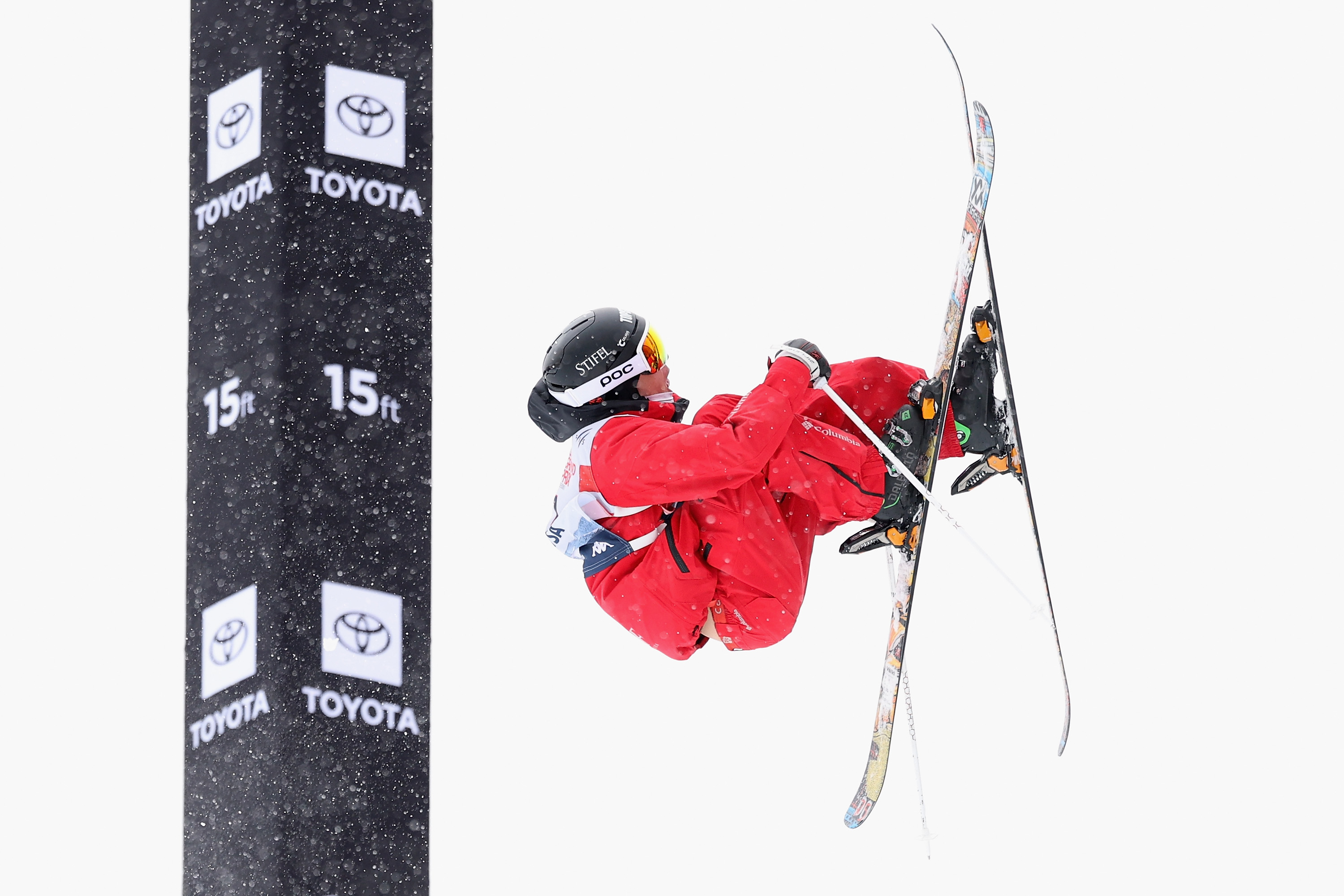
COPPER MOUNTAIN, COLORADO - DECEMBER 20: Alex Ferreira of the United States competes in the Men's Freeski Halfpipe Final during the Toyota US Grand Prix 2025 at Copper Mountain on December 20, 2025 in Copper Mountain, Colorado.  (Photo by Sean M. Haffey/Getty Images)

Knowing your limit

But for the best in the world, a healthy respect for the worst-case scenario isn't just a requirement, it's a superpower.

It never guarantees that everyone is going to make it through safely. But it does tilt the risk profile further in their favor than most of us civilians can wrap our minds around.

That can be hard to quantify with a number, but it's the seed of doubt that keeps them safe on days when the wind blows a little too hard or when they're not physically at their best. It's the meter in the back of their minds constantly calculating the likelihood of landing a trick or nailing a run — and the potential danger waiting for them if they don't. In many cases, it's what prevents a bruising fall from becoming broken bones or worse.

It's the necessary boundary between being an adrenaline junkie and doing something that turns risk into recklessness.

"I've never tried anything where I was like, 'Oh, this might not be the day for it,'" said Alex Hall, the freestyle skier who won slopestyle gold in Beijing four years ago. "You want to be on the upper edge of your comfort level, but there's a fine line between (approaching it) and going beyond it."

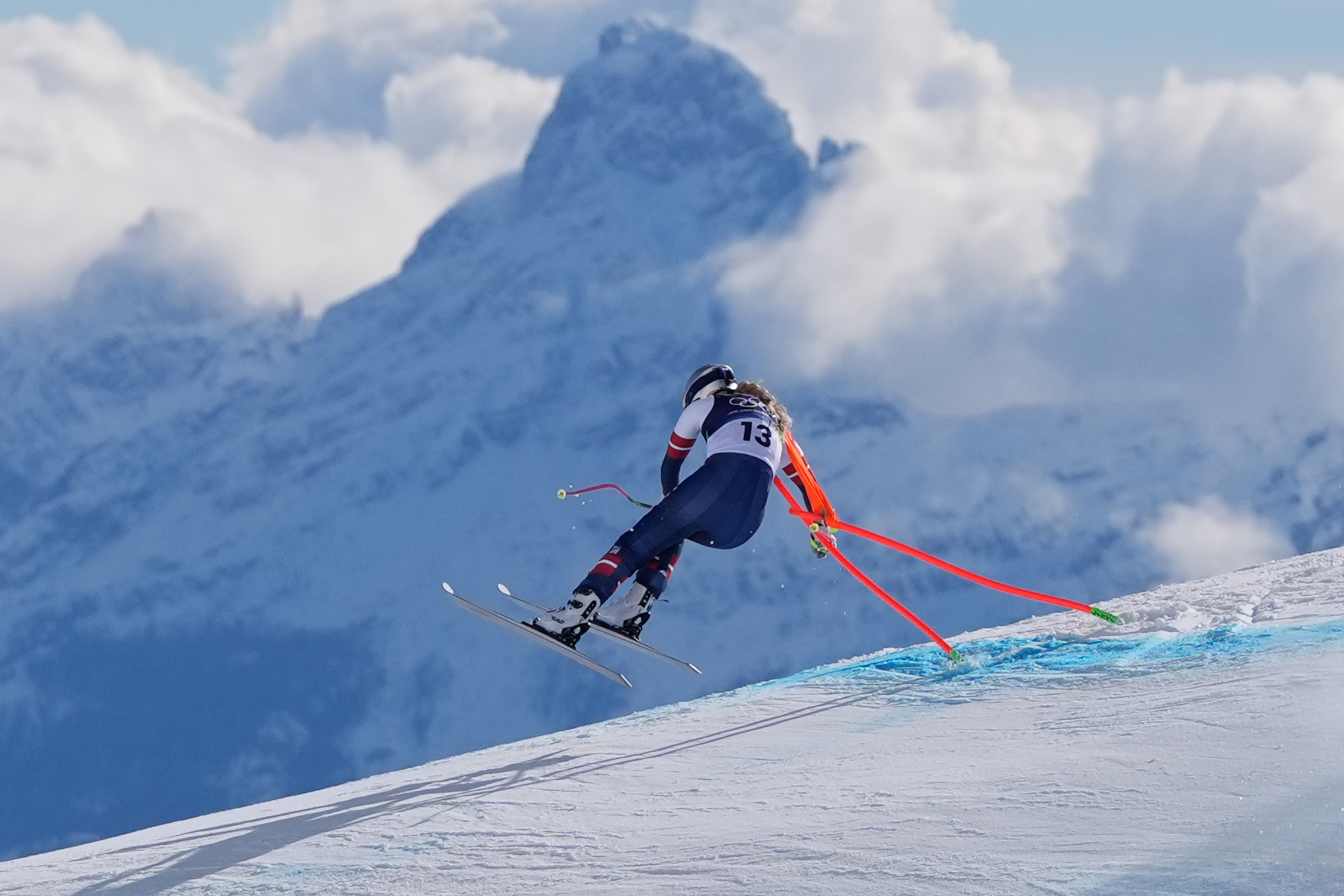
United States' Lindsey Vonn crashes into a gate during an alpine ski women's downhill race, at the 2026 Winter Olympics, in Cortina d'Ampezzo, Italy, Sunday, Feb. 8, 2026. (AP Photo/Jacquelyn Martin)

Did Vonn go too far?

Mancuso can only relate it to a similar experience she had at the Sochi Games in 2014, where her confidence after winning the first portion of the women's combined event got the better of her and she took more aggressive lines than she should have in more difficult conditions.

"I think she went into the Olympics and was like, 'This is it. I'm leaving it all on the line,'" Mancuso said. "And she kind of forgot she was injured. And rightfully so, you don't want to go out of the gate thinking I'm injured. But in this situation, she probably shouldn't have been pushing the limits above that line. It looked to me like the course ran faster and you could see her kick out of the start gate with everything she had to give and went really tight across the traverse.

"If you're really trying to not leave anything on the hill, you cut the line to these tiny bits. So in that sense, she was really trying to be perfect and the snow was a little bit grippy or a bit harder and it didn't push her down the hill probably like she thought and launched her right into that gate."

Bar continues to rise

Much like in speed racing, where the improvement in technology has made skiers faster and their task more treacherous, the trend lines in freeski and snowboard have moved in the direction of more dangerous maneuvers. Tricks that might have won medals two or three Olympics ago are now considered pedestrian.

Advertisement

Take, for example, the big air competition. Added to the Olympics in 2018, competitors ski or snowboard down a massive ramp, launch into the air and perform a trick that is judged on a variety of factors including creativity, difficulty, number of flips and rotations and, of course, execution.

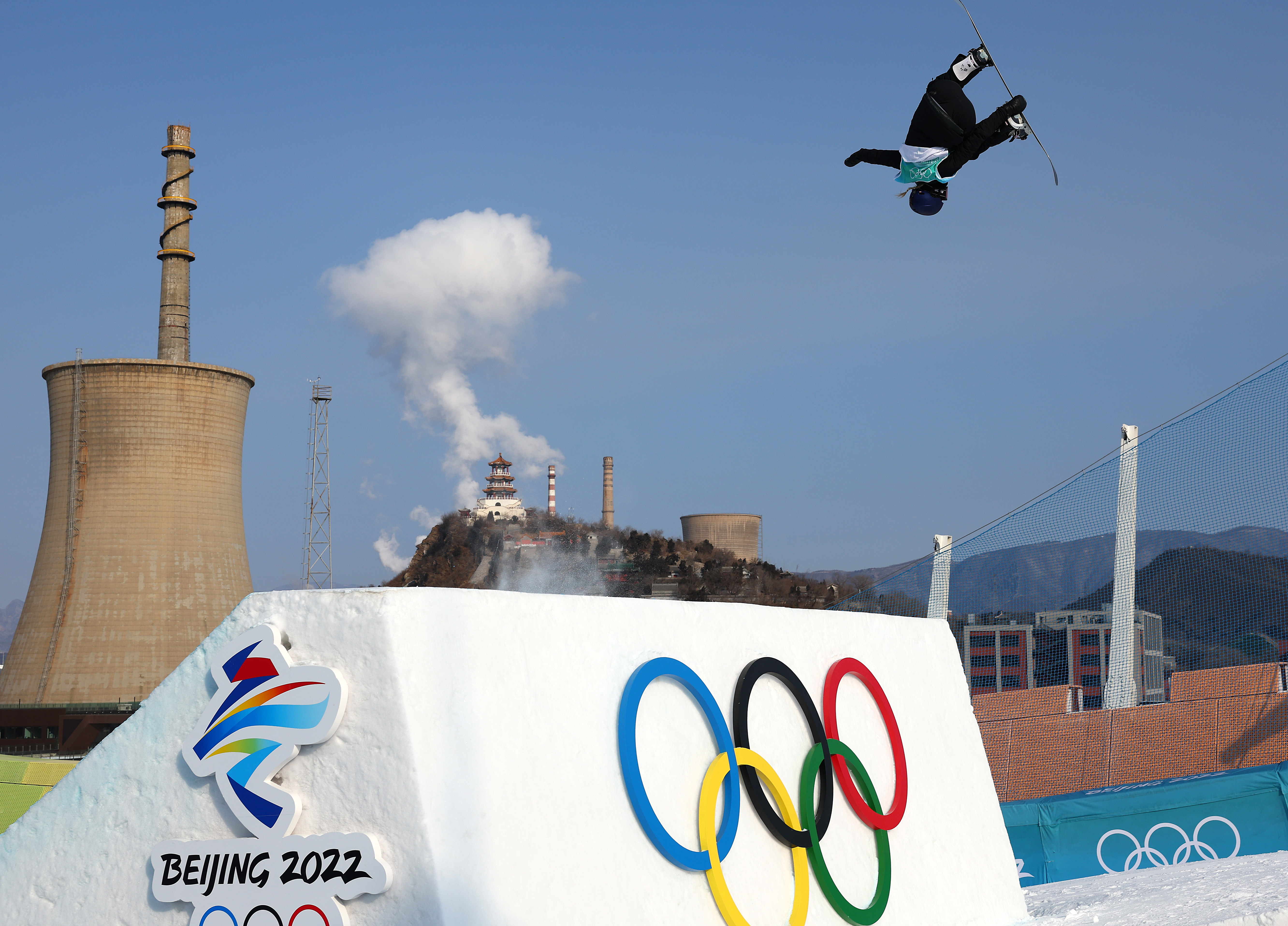
It is an inherently dangerous endeavor, one that has always given pause to Red Gerard, a slopestyle specialist who won the gold medal in 2018. In the Olympics, making the team means qualifying for both events automatically. After failing to qualify for the Big Air final on Thursday night here, he questioned why snowboarders have to do both and criticized the setup of the jump, a freestanding structure built on scaffolding, rather than cut into the mountain.

"I don't understand why we're forced to do this," he said. "I just want to be focusing on slopestyle. Not to dig on anyone that does it — everyone that does this are badasses that are very good at the sport — but this is not my gig."

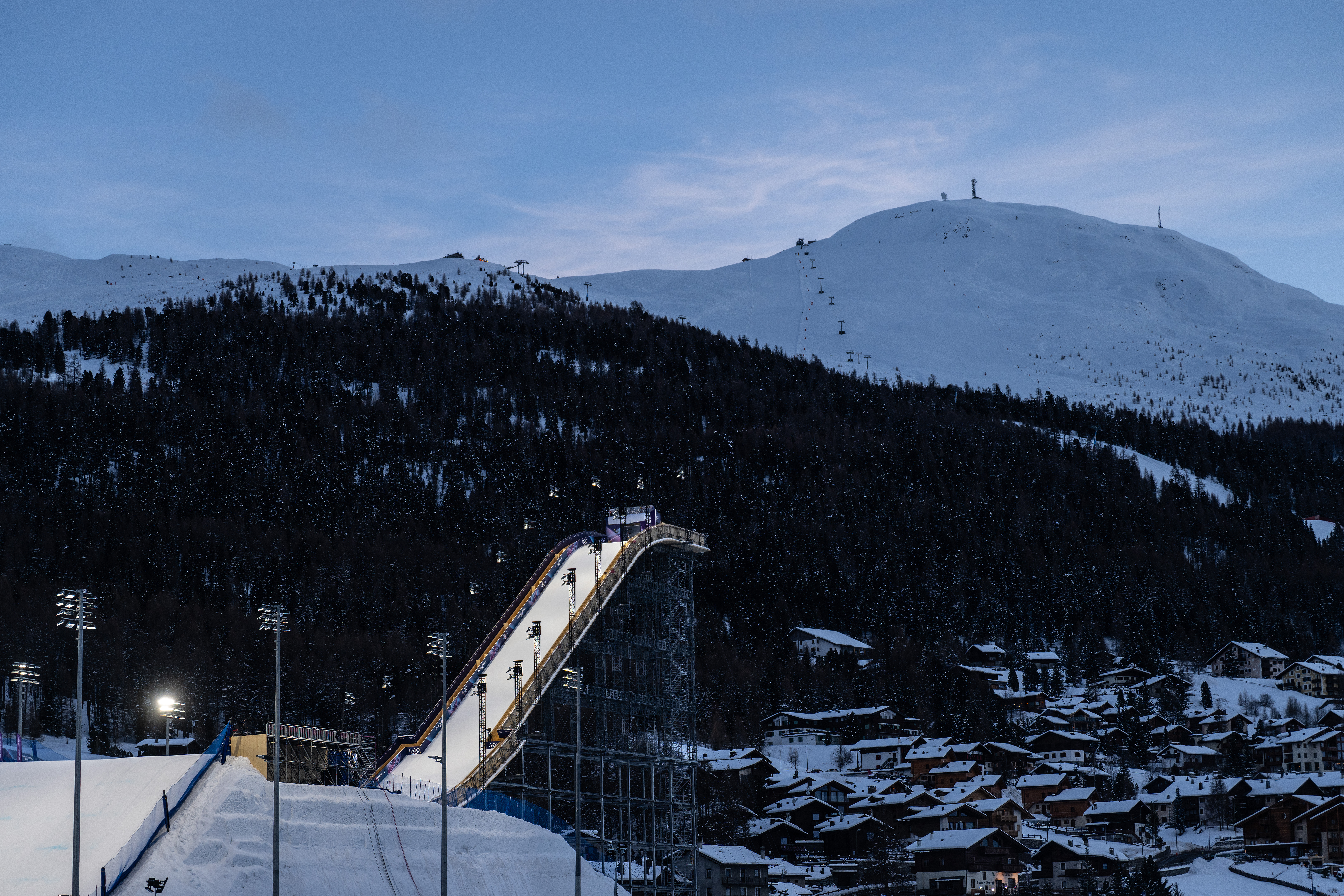
LIVIGNO, ITALY - FEBRUARY 02: A general view of the Big Air venue inside the Olympic Snow Park on February 02, 2026 in Livigno, Italy. (Photo by David Ramos/Getty Images)

Gerard is among the many snowboarders who watched asCanada's Mark McMorris crashed during big air training on Wednesdayand withdrew, citing the fact he hit his head during the fall. Though it appears McMorris did not suffer serious injuries and could compete in slopestyle, it was one more factor giving pause to riders like Gerard who do not want to compromise themselves for their best event.

"He's like a GOAT of our sport," Gerard said. "You think those guys are invincible in a lot of ways and it sucks to see when it does happen like that. I think, personally, maybe that could have been avoided, doing a jump on scaffolding and stuff like that."

And Big Air only gets bigger and more dangerous every Olympic cycle.

Snowboarder Jamie Anderson, now 35, won silver at the first big air in Pyeongchang with a frontside 1080-degree trick — three full rotations in the air. She was one-upped by Austria's Anna Gasser, who executed a more complex 1080.

Four years later in Beijing, it took a double cork 1260 — 3 ½ full off-axis spins — for Gasser to repeat as gold medalist while Anderson finished off the podium. Anderson, who failed to qualify for this year's Olympic team after taking time away from the sport to have children, acknowledged that her new status as a mother changed her risk profile.

"The tricks are crazy," she said. "Girls are doing triple corks and 1440s and maybe even 1620s. In four years to see how much it's evolved and progressed just goes to show how insane all the training facilities and modern technology has become."

BEIJING, CHINA - FEBRUARY 15: Anna Gasser of Team Austria performs a trick during the Women's Snowboard Big Air final on Day 11 of the Beijing Winter Olympics at Big Air Shougang on February 15, 2022 in Beijing, China. (Photo by Elsa/Getty Images)

No guarantees

These skiing and snowboarding labs are where the elaborate and dangerous tricks get built. Before one of these athletes ever tries something risky on the snow, they will have practiced all the moves on a trampoline, progressing to rollerblades into a foam pit and then jumping into a 300-foot by 100-foot airbag with their skis or snowboard on.

Still, even after months of development, it's different when you're on the mountain with no air bag for protection.

"You have to go, you have to try it and you have to fully commit the first time," said Nick Goepper, a freestyle skier who has medaled in slopestyle at the last three Winter Games.

But what happens if you get into the heat of competition and realize everything you've practiced and perfected isn't going to be good enough?

That may be part of what Vonn experienced Sunday, seeingBreezy Johnson post a run that was going to be tough to beat, forcing her to expand that risk tolerance just a little bit.

That's certainly the situation Hall faced four years ago in Beijing, knowing he needed something special in his final attempt to medal in big air. Instead of trying an easier trick that would have given him a 50-50 shot to be on the podium, he took on extra risk trying to win it all.

"I didn't make that decision until about five seconds before dropping in," he said. "It didn't quite go my way — I landed on my feet and barely tipped over — but I'm proud of trying it."

In a way, that innate desire to reach for something a little more is what animates so much of the progression in these dangerous winter sports. It's not just about winning, it's about looking good and pushing your own limits — even if you fail.

"The guys you really respect in your sport, you want them to be excited about what you're doing too," Hall said.

As a result, it's practically impossible to compete in these sports over a long stretch of time without suffering a few injuries along the way, forcing athletes to hone their own instincts about what's too dangerous, how to safely eject from a bad situation and mitigate damage if something goes wrong.

"Once you take a crash, you learn quickly, 'Oh, I don't want that to happen again,'" Ferreira said. "You realize it can't happen again or I won't be able to keep going."

But there are never any guarantees, and with each Olympic cycle, the bar for danger gets raised. Younger competitors are willing to take on more and more risk. The outgoing generation has to decide whether it's worthwhile to try and keep up.

Vonn ended up on the wrong side of that line Saturday. But after a lifetime of managing the inherent risks of her sport, it wasn't because she didn't respect the potential for danger. It's because she was comfortable with it in ways most of us will never understand.

Read More

Prince William and Princess Catherine express deep concern for Epstein victims

February 09, 2026
Prince William and Princess Catherine express deep concern for Epstein victims

LONDON (AP) — Prince William and Princess Catherine expressed concern for the victims of Jeffrey Epstein in a statement released Monday, the latest move by the British monarchy to distance itself from revelations about theformer Prince Andrew's relationshipwith the convicted sex offender.

Britain's most popular royals say that they were appalled by the contents of more than3 million pages of documentsreleased earlier this month by the U.S. Department of Justice.

"I can confirm that the Prince and Princess of Wales have been deeply concerned by the continued revelations,'' the palace said in a statement. "Their thoughts remain focused on the victims."

The statement released ahead of William's three-day trip to Saudi Arabia, which begins Monday, is part of the monarchy's response to the escalating crisis surrounding the former prince, who was stripped of his royal titles in October after previous revelations about his relationship with Epstein. King Charles III's 65-year-old brother is now known simply as Andrew Mountbatten-Windsor.

The king last week forced Mountbatten-Windsorto leave his longtime home at Royal Lodge near Windsor Castle, accelerating a move that was first announced in October but wasn't expected to be completed until later this year.

Mountbatten-Windsor is now living on theking's Sandringham estate in eastern England. He will live temporarily at Wood Farm Cottage while his permanent home on the estate undergoes repairs.

Mountbatten-Windsor has repeatedly denied any wrongdoing in his relationship with Epstein. has repeatedly denied any wrongdoing in his relationship with Epstein.

Read More